
CheManager Innovation Pitch
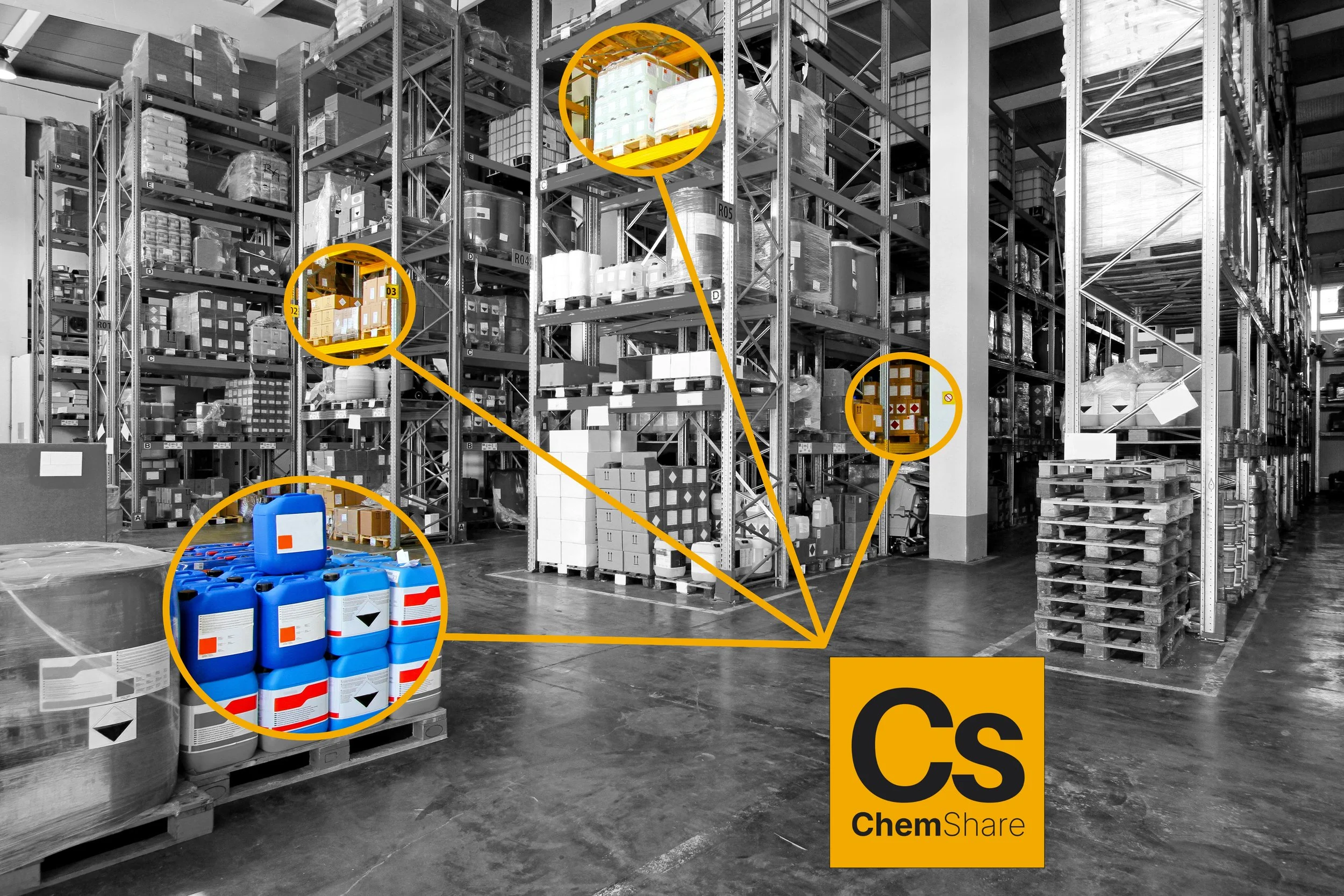
We're pleased to share that ChemShare was featured in the CHEManager Innovation Pitch — the start-up section of CHEManager, the leading publication for management in the chemical and pharmaceutical industry. In an interview, our founders Detlef Klomfass and Patrick Singler spoke about why surplus chemicals belong back in the market, how our intermediary platform works, and where we're headed.
The original article is in German: Read it on CHEManager (in German)
For our international readers, here is an English version.
The interview
ChemShare turns surplus chemicals into new sources of revenue. The Bonn-based start-up offers a secure route to trade surplus chemical products — from a few milligrams up to 500 kilograms — helping companies avoid the cost of disposal or storage. CHEManager spoke with founders Detlef Klomfass and Patrick Singler about their motivation and their plans and goals for ChemShare.
When and how did the ChemShare story begin, and which experiences from your previous roles led you to found the company?
Detlef Klomfass: Patrick and I have been colleagues for many years and are now business partners. What connects us: we both get a headache from inefficient solutions and wasted resources. We spent many years working in the chemical process industry, and we kept seeing the same thing. Surplus stock is an everyday reality in this sector — companies order more than they need, formulations change, batches are left sitting. Storing them costs money. And in the end, they get disposed of. Especially in today's geopolitical climate, that's no longer something you can simply accept. Until now, there was no simple, secure way to pass these stocks on and turn them into revenue. That's the gap we're closing with ChemShare.
ChemShare positions itself as an intermediary platform — not a trader. Why does the market need exactly this approach, and what sets ChemShare apart from traditional chemical distributors?
Patrick Singler: Traditional chemical distributors buy from the manufacturer and sell to companies — that's no model for surplus quantities. Anyone wanting to get rid of a leftover batch has had few options so far: store it, dispose of it, or hope someone internally has a use for it. ChemShare creates a direct route from those who have too much to those who need it — without detours, and often regionally. The short, direct path, so to speak. We act as intermediaries, and the parties conclude the contract directly with each other.
What stage is the start-up at right now, and what are the next steps?
P. Singler: We've been in development since December 2025 and are about to launch the beta phase. We're looking for pioneers: companies with surplus stock who want to be the first to use the platform and actively help shape it, on special terms. Our focus isn't only on the technology, but on the fit with real-day-to-day operations and sector-specific requirements. The decision to sell surplus quantities rather than dispose of them has to fit seamlessly into existing workflows. Only then does it become second nature. From our headquarters in Bonn, we've already made initial contacts across North Rhine-Westphalia. A rollout across the entire DACH region (Germany, Austria, Switzerland) is firmly planned — and after that comes the next logical step: free trade within the European single market. The official launch will follow in about six months.
What have been the biggest challenges so far, and how have you tackled them?
P. Singler: The biggest challenge is complexity. Chemicals — often hazardous substances — come with regulatory requirements you can't just click away. Mapping the entire process so that it's safe and compliant yet still easy to use can only be done step by step. Our aim is B2C-level convenience in a complex B2B environment. And honestly, our own impatience is a challenge too.
What is your vision for ChemShare?
D. Klomfass: We want to establish the first genuine secondary market for chemicals in Europe. Surplus quantities should no longer be disposed of simply because there's no easy way to pass them on — only when nobody truly needs them. And that will rarely be the case.
P. Singler: And in the long run we want to be more than a platform: ChemShare should become the place where an entire industry has learned to share — because it pays off, because it's safe and sustainable, and because it simply makes sense.
The founders
Detlef Klomfass holds a doctorate in organic chemistry and is an experienced entrepreneur. His field: the digitalization of complex business processes in the process industry — from hazardous-substance management and occupational safety through to regulatory requirements such as REACH. With his company DeBoSys, he has been developing and implementing innovative business models since 2008. His career began at Baxter and GHX Global Healthcare Exchange, followed by leadership positions at companies including CrossKnowledge and EcoOnline. At ChemShare, alongside business development and sales, he focuses above all on company development.
Patrick Singler knows the chemical process industry from the inside. Safety data sheets, hazardous-substance inventories, occupational health and safety — that's his terrain. Over many years, he brought digital solutions into the industry, including at Munio/EcoOnline: simplifying processes, making compliance manageable, and building sales teams across Europe. With his company ScaleBridge, he supports SaaS providers entering the German market. At ChemShare, together with Detlef Klomfass, he leads business development and sales — and heads up product development.
Surplus stock belongs in the market
Surplus stock isn't the result of poor management. It's the result of structural realities: order quantities never match demand exactly, formulations within a production line change, chemicals with a short shelf life can't always be used in time, and projects come to an end. That's everyday life in the chemical industry. And for a long time, the industry did the obvious thing: stored, waited, and ultimately wrote it off — because there was no better option. Tied-up capital, ongoing storage costs, and disposal costs at the end: the problem has a price. Those who store, pay — and those who dispose, pay again.
ChemShare changes that. As an intermediary platform, ChemShare connects companies that have surplus stock directly with companies that have a concrete need. No detours, with the shortest possible transport routes, compliant from the very start. Suppliers list their items together with safety data sheets. Buyers can search for the substances they need and source them via the suppliers. The purchase contract is concluded directly between the parties. What emerges is more than a transaction: a network of companies that know about — and benefit from — one another. And the network grows with every match.
Compliance is a given when chemicals are traded between supplier and buyer. Without a safety data sheet, no purchase goes ahead. And ChemShare ensures that only qualified companies gain access. Only unused, originally packaged pure substances and industrial chemicals are traded, in quantities from a few milligrams up to 500 kilograms.
What suppliers book as real revenue is, for buyers, straightforward access to materials they need anyway — often regionally and at short notice, on more favorable terms. A fair deal that adds up for both sides. And anyone who passes surplus stock on via ChemShare instead of disposing of it also gains something tangible: a documentable contribution to sustainability reporting. ChemShare is committed to making CircularChem the new industry standard.
Milestones & roadmap
The founders of ChemShare, Detlef Klomfass and Patrick Singler, know the problem first-hand: surplus stock arises structurally — and the industry has simply accepted it until now. ChemShare doesn't. The founders want to build a bridge between industry know-how and digital innovation.
As an intermediary platform, ChemShare brings together what belongs together: companies with surplus quantities and companies with a concrete need. Tied-up capital becomes real revenue. Storage costs disappear. So does disposal. And compliance is built in from the start — not as a leaflet in the box, but as the foundation.
The aim: B2C-level convenience in a complex B2B environment. ChemShare is not an outsider software vendor. REACH, safety data sheets, regulatory reality — this is familiar terrain.
ChemShare is about to enter its beta phase and is looking for pioneers: companies with surplus stock who join first and actively help shape the platform — on special terms. A rollout across the DACH region and subsequently into the wider European market is firmly planned.
Sell instead of store. Sell instead of writing off. That's ChemShare.
Roadmap
2026 — Q1: MVP specification and testing of different development approaches
Q2: Founding of ChemShare GmbH
Q2: MVP launch (beta)
Q3–Q4: Closed beta phase with customers for company- and sector-specific adaptations (focus on DACH)
2027 — Ramp-up focus in Germany, Austria, and Switzerland
2028 — Internationalization into the European single market
Be part of it
ChemShare is entering its beta phase and is looking for pioneer partners. Companies with surplus and residual stock of chemicals have the opportunity to bring their own operational and industry requirements into the platform's development — and to use it ahead of the general market launch. Special terms are available.
ChemShare, Bonn · www.chemshare.de
